Feed

Friday, May 28, 2021

A LOOK AT PROBABLE CAUSES FOR OUR CRIME SITUATION - BY SILVANIUS FONTENARD

On a recent Facebook post Mr Fontenard has this to say. Thought it interesting as many salient points were made with regards to probable causes for the crime  surge on island.. 

By Silvanius Fontenard.

Silvanius Fontenard
"Everyone seems to be frustrated with the crime situation in the country and most people appear to believe there can be a quick fix.

For over 30 years society has been marginalising it's male children at home, in the school system, the job market and the society in general. Consciously or otherwise there has been a deliberate effort to give the female gender preferential treatment in conformance with the new world order. A paradigm shift orchestrated by the white world to take the attention away from racism when they created what they call the women's rights movement. 

I am not in any way suggesting that some countries treated women unequally but in most of those countries little has changed in that regard with religion and tradition being strongly upheld.

Strangely, it is the countries where the issue was not significant which made the big shift and in the process forgot the boys. In the process few male teachers have been employed thus subjugating sports and reducing the attention males students got in the school system, parents also went overboard in many instances by ensuring that their daughters got all the attention to conform to the new order leaving the majority of boys in the cold.

There is nothing wrong with looking after our girls. After all my daughter has a Phd, but all children should be treated equally everywhere. The result of this shift is a huge amount of under educated, under trained boys who are unprepared for our fast paced societies in the Caribbean and elsewhere in the West . The result is that they are easily persuaded to jump into fast money schemes and false ego building endeavours.

Therefore the problem cannot be fixed in the short term. Our society will need to change its focus so in addition to addressing the social disaster which has been created we need to work hard to prevent another generation of boys from joining the lost club. After all, who will father the children of the future? There is no other choice because otherwise crime , violence and disorder among our males will be with us for a long time to come.

It's a direction in which we need to go together, not just left for any govt to address and it needs to be done with the greatest urgency. As for the short term auctions to the crisis this one is for our Sociologist to lead us on but we all need to jump in to nip this crisis as quickly as possibly. Both the long and short term solutions will require very deliberate actions on the part of parents, the school system, government, and the society at large."

Read the Facebook article and comments here.


Monday, April 12, 2021

Bradley, Pauline and Alphonsus Agree to Virtual Town Hall Meeting?


Until the reopening of many sectors on island and with the ongoing uncertainty around the COVID-19 pandemic, virtual town hall meetings are more important than ever. They’re a valuable way in politics for constituents to hear from leaders, create a sense of community and reinforce the constituency’s mission, goals, values and culture

 In more than 30 years’ experience in political campaigning, I’ve learned that one of the things voters value most is the opportunity to connect with leaders. That’s why town hall meetings are so important; they give leaders a forum for sharing their plans, reviewing critical issues and discussing what constituents can do to help their communities succeed.

The intention behind this new initiative, it appears to me, is to create an open space for voters to engage in conversations. One would hope that these three meetings do not become just a series of dense, one-way presentations which can be made worse if one session is just the same as each other town hall.

Top - Pauline Prospere, Bottom - Alphonsus St Rose, Right - Hon. Bradley Felix

Political town hall meetings are great for getting everyone in the constituency together at the same time to share important constituency updates, strategy decisions, and progress toward candidate-wide goals. Additionally, virtual town halls gives each potential candidate  the ability to easily share content, interact with the audience in new ways and record the discussion for playback later.

According to Jonathan Chalon, from Ministry of Youth and Sports, “This is a great opportunity for our Choiseul Youth to engage in a dialogue with each candidate on different dates. Let us listen to what is in store for us and also for us to share our concerns and get answers to those burning questions.”

Virtual town hall meetings were mostly unheard of a year ago. Now they’re a powerful tool in the politician communication toolbox.
You can jointhe event via the zoom platform. Look out for additional information in the coming days!!!

Sunday, February 28, 2021

What will Happen to Your Body If You Walk Everyday!

 1. You walk more - you get sick less

The habit of walking a lot reduces the risk of type 2 diabetes by 60%. And the chances of developing colon, breast, or uterine cancer are reduced by 20%. This is why it is worth leading an active lifestyle!

2. Strengthening the heart

Regular walking reduces the risk of heart disease. It's a great cardio workout for any age.

3. Walking as a way to lose weight

Simply walking at 2 km / h will burn approximately 75 calories in 30 minutes. Incorporate regular walking into your routine and you can quickly shed a few pounds.

4. Strengthening the legs, buttocks, and abdomen

Long walks are a great way to keep your thighs, calves, and glutes in shape.

5. Walking helps you get energized

Walking briskly is one of the best ways to invigorate.

6. Walking for joint health

Articular cartilage does not have a direct blood supply because there are no blood vessels in it. As you walk, the joint contracts and expands, allowing nutrients to enter the joint and slowing down wear and tear.

7. Walking promotes vitamin D production

Another reason to be outdoors more often. Many people living in modern cities suffer from a lack of vitamin D, which can affect the health of the bones and the immune system. Walking outside gives you more sunlight, which means more vitamin D.

8. Walking helps keep your mind clear

Older adults who walk 6-10 km per week are more likely to retain their intelligence and memory over the years.

9. The more you walk, the better you sleep.

According to a study by American scientists, women between the ages of 50 and 75 who took an hour's morning walks complained less of insomnia than those who did not walk.

10. Walking makes you happier.

The level of endorphins in the blood rises, while the level of anxiety and stress decreases. This is why walking is essential for mental health!

Wednesday, February 24, 2021

Do You Know Qualities of a "Good" Person?

 A Genuinely good person is recognized by the following, in my experience.


They keep an open Mind about others Opinions.

They accept when they’re Wrong and try to learn from their Mistake.

They have a Positive energy to them that draws others In.

They’re trustworthy and Dependable not only when it Counts.

They have a Warmth to them, you feel like you can tell them Anything.

They always have a Positive Outlook on life.

They let people have their Moment to Shine.

They don’t try to One up others, sharing about their own personal Experiences.

They give others a chance to Finish their Thoughts and stories.

They have Patience, Compassion, and Empathy.

They also have Amazing emotional Intelligence.

They’re truly Happy about others Success and offer their support.

They’re slow to Speak and quick to Listen.

Just a few things I’ve noticed!

Thursday, February 18, 2021

National Symbols of St Lucia ahead of 42nd Independence Anniversary

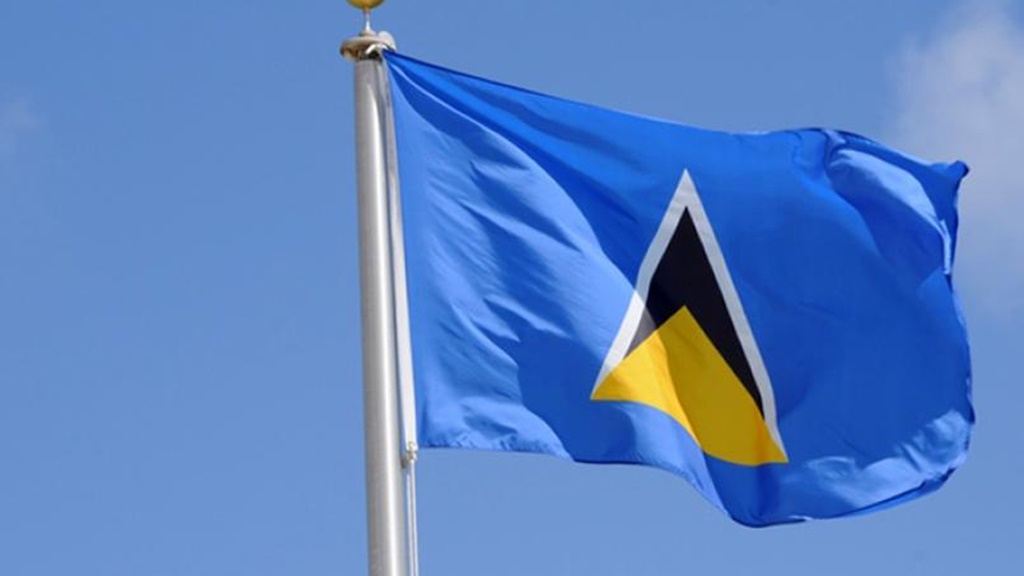
The St Lucian Flag

 As we get set to celebrate St Lucia’s 42nd Independence Anniversary under the theme ‘A Resilient Nation. We can, we will’, it is only fitting that we highlight things that are native to the island.

This year's theme signifies a nation battling the significant toll of the COVID-19 pandemic and looks to a nationwide effort to persevere.

The national symbols are the national identity elements of St Lucia and are intrinsic to the St Lucian identity and heritage. St Lucians across the world are proud of these National Symbols as they infuse a sense of pride and patriotism in all of their hearts.

The National Flag

For most of its colonial history under the French and British, Saint Lucia did not have a distinctive flag of its own. However, on March 1, 1967, when St Lucia advanced to the status of Associated Statehood, the National Flag was adopted. The original version of the flag in use today was designed by local artist Dunstan St Omer.

Coat of Arms

Did you know that St Lucia had more than one Coat of Arms? In 1837 ST Lucia had its’ first Coat of Arms which depicted Port Castries flanked by the Pitons and the Citadel at Morne Fortune. At that time the motto was ‘Statio Haud Malefida’ meaning ‘A safe harbor for ships.’ Upon attaining Statehood on March 01, 1967, the Coat of Arms was designed by Sydney Bagshaw with the motto ‘The Land, the People, the Light.’ However, in 1979, when St Lucia became an independent nation Bagshaw gave the Coat of Arms a different look but kept the motto “The Land, the People, the Light.

The Coat of Arms represents the official seal of the Government of Saint Lucia. The emblem on the Coat of Arms were chosen to represent the various peoples who are part of the nation’s heritage. It is made of a blue shield with a stool, two roses, and two fleurs de lis. The shield is supported by two Saint Lucian parrots. Beneath the shield is the national motto, whereas above the shield there is a torch and an ornament. The symbolism of the elements are:

Tudor Rose: England      

Fleur de lis: France         

Stool: Africa

Torch: Beacon to light the path  

Saint Lucia Parrot: Amazona versicolor, the National Bird

The Motto: " The Land, The People, The Light"

 National Bird

The Saint Lucia Parrot (Amazona versicolor) is endemic to Saint Lucia and is the country’s national bird. It was first described by Miller in 1776, this beautiful parrot is, and always has been found only in Saint Lucia. It is predominantly green in colour, and a typical specimen has a cobalt blue forehead merging through turquoise to green on the cheeks and a scarlet breast. Threatened by extinction, in 1978 the Forestry Division of the Ministry of Agriculture launched a campaign to save this species. In 1979 the Saint Lucia Parrot was declared the island’s National Bird and in 1980 wildlife legislation was revised.

The National Anthem

The national anthem of Saint Lucia is ‘Sons and Daughters of Saint Lucia.’ The anthem was first adopted in 1967 when the island became an Associated Statehood, and it was confirmed as the official anthem when St Lucia became independent in 1979. The lyrics were written by Rev Charles Jesse, and the music by Leton Thomas.

The National Dress

The Madras, also called the Jip or Jupe, is the national dress of the country of Saint Lucia. A traditional five-piece costume, it was originally derived from the Wob Dwyiet (or Wobe Dwiette), a grand robe worn by the earlier French settlers, and this garment is also recognized as a national dress of the country. The Madras is the traditional dress of the women and girls of St Lucia, and its name is derived from the Madras cloth, a fabric used in the costume.

The origins of the Madras lie in the pre-emancipation days of St Lucia when African slaves on the island would don the colorful dress during feast days. The costume is traditionally worn on Independence Day, National Day, and Creole Day (Jounen Kwéyòl). It is also worn when dancing the Quadrille, which has been adopted by the country as the national dance.

National Flower, Plant and Tree

The Rose and the Marguerite are the symbols of the two flower societies of Saint Lucia. They emerged as winners of the National Flower Competition in September 1985. They are associated with the Flower Festivals; La Rose Festival celebrated on August 30 and La Marguerite on October 17.

The national tree of Saint Lucia is the calabash and the national plant is the bamboo.

Editor's Note: Source -  http://www.loopslu.com/content/national-symbols-st-lucia


Tuesday, January 26, 2021

General Elections During COVID-19

 With national election scheduled for later this year, the coronavirus (COVID-19) pandemic is putting into question whether this election will happen on time or at all.

The rapidly evolving situation has generated severe disruptions on multiple layers of society, with important impact on the political life, placing world leaders in the position of making rapid critical decisions based on information that emerges by the hour. 


In such a situation, the constitutional and legal parameters should be carefully navigated. The day-by-day ever-developing advice of epidemiologists and public health officials must be considered. Public concern of actual or perceived politically motivated abuse of the postponement must be taken seriously. Any attempt by an incumbent government to “undemocratically” extend its own mandate must be mitigated. 

The International Institute for Democracy and Electoral Assistance (International IDEA) identified a series of key considerations and recommendations to make informed decisions, based on an analysis of  the current evolutions worldwide  and on Institute’s previous comparative studies on elections in crisis situations  and its Electoral Risk Management Tool.  

ASSESS RISKS AND IMPLICATIONS 
The main objective of electoral processes is to deliver credible electoral results. Credibility is achieved through technically well executed electoral process, broad participation and trusted results that infuse legitimacy in elected officials. 

Depending on the degree of disruptions generated by the COVID-19, organizing elections can be very difficult or even impossible. For example, the production and distribution of ballot papers, voting booths, seals and other supplies needed during the process can be seriously affected by the measures imposed for limiting the spread of the virus. Furthermore, there is a high likelihood that poll workers may fear infection or get infected and therefore not assume their critical roles. Shortage of (qualified) poll workers may lead to technical shortfalls.  

At their best, democratic elections are characterised by high turnout and equal levels of participation across different segments in a society to avoid that the outcome of an election is unevenly shaped by some groups over others. There is a risk that the decision of continuing to hold an election as originally scheduled, despite pandemic outbreak, could undermine their overall legitimacy by reducing voter turnout.  Yet with the need for limited exposure to large groups and social distancing, ccitizens might be less likely to leave their homes to vote because of their health concerns and that of their family members.  

CONSIDER ALTERNATIVE SOLUTIONS 
Health and safety routines can be incorporated into election related procedures, to protect election staff and voters. If public health instructions are meant to avoid gatherings and proximity to other persons – as in the case of COVID-19, participation becomes more difficult in a polling station-based election, where the act of voting requires the physical presence of those expressing it.   

Implementing or further developing alternative voting methods should therefore be considered, while also assessing their logistical implications and feasibility in the current circumstances.  

If alternative methods for remote voting are adopted, voters will need to be informed and educated about how and when to use them. In a complete lockdown situation, such as that being imposed by numerous nations in response to the outbreak of COVID-19, an information campaign should be tailored to reach voters through both traditional (TV and radio) and online media.  

CREATE AN INCLUSIVE DECISION-MAKING PROCESS 
While the COVID-19 pandemic brings unique dimensions to decisions about holding or postponing elections, many aspects of the decision-making process are typical to any national emergency. In many  countries [St Lucia], the constitutional provisions during the state of emergency include the postponement of elections, but there are also states where the first does not necessarily imply the latter. Decision-making is more straightforward where constitutions or laws clearly spell out the conditions under which elections can be suspended or postponed. Even in these cases, however, there is normally a broad degree of interpretation in the application of the guidelines.  

Similar to other crisis events,interagency consultation  and communication mechanisms that include electoral and public health authorities should be put in place to carefully weigh public safety and security risks, constitutional constraints and procedures, and democratic implications.   

In extreme circumstances such as the ones triggered by the current COVID-19 in many countries, holding elections might divert human and material resources from more urgent, potentially lifesaving activities.
 
SAFEGUARD DEMOCRACY  
Elections are the opportunity for citizens to either reconfirm, or remove and replace, an elected representative or government.  A decision to postpone an election suspends political rights, and as such undermines the social contract between a government and its citizens.  

Essentially, both proceeding with elections while the COVID-19 pandemic is not contained or postponing them entail risks for decision makers. While the latter may be the most feasible and responsible option from the public health perspective, the decision may open for other risks to materialize. Governments need to allow for clear pathways that guide how existing institutions and actors can proceed during the extension period, and when the normal electoral routines will be reinstated.